
Fiestas Patrias 2026: 7 Chilean Wine Pairings for the Dieciocho Table
Chile's national day lands inside Hispanic Heritage Month. Here are 7 pairings, with serving temperatures, that turn asado and empanadas into a Chilean wine sale.
On September 18, Chile marks 216 years since the First Government Junta of 1810. Chileans call it simply el Dieciocho, the Eighteenth, and it is less a parade than a two-day national cookout: the parrilla lit by mid-morning, empanadas by the dozen, cumbia and cueca on until the sausages run out.
Here is the part American retailers and restaurant buyers keep missing. September 18 sits squarely inside Hispanic Heritage Month, which runs September 15 to October 15, and the calendar is no accident: the month opens on the independence anniversary of five Central American nations, Mexico follows on the 16th, and Chile on the 18th. That gives you one four-week window where a Chilean wine display is not a merchandising gimmick. It is the actual occasion.
And Chile arrives at that window in an unusual position. In January 2026 its bottled wine exports fell 12.5% in volume, yet the average price per case rose 3.6%, from USD 27.40 to USD 28.40, according to Wine Intelligence. Fewer bottles, better bottles. The USD 40 to 50 per case tier grew almost 40% in both volume and value. Chile is not shrinking so much as trading up, and a holiday table is exactly where a shopper agrees to spend a little more.
Key Takeaways
- September 18 is Chile's national day, and it falls inside Hispanic Heritage Month (Sept 15 to Oct 15).
- Chilean wine is premiumizing, not collapsing: volume down 12.5% in January 2026, average case price up 3.6%.
- The Dieciocho menu is grilled, fatty and hand-held, which is a gift to Carmenere and Cabernet Sauvignon.
- Serve reds cooler than room temperature. A 72°F Carmenere tastes like alcohol; a 62°F one tastes like fruit.
- Build the set now. Displays go up September 15, which means orders land the week before.
Why a US wine buyer should care about the Dieciocho
Hispanic households now account for roughly 15% of US consumer spending, the largest share of any non-White ethnic group, and Hispanic Heritage Month has become a real retail programming season rather than a poster in the break room. The 2026 national theme is "Pioneers of Change: Shaping the Future Together."
For a wine department, the practical read is this: shoppers walking in between September 15 and October 15 are already thinking about a specific table. Mexico gets the attention. Chile gets the margin, because Chilean reds in the quality tiers now growing fastest still undercut Napa and Bordeaux on the same shelf while pouring like something considerably more expensive.
At Manzanos Wines USA our Chilean house is Cremaschi Furlotti, in the Maule Valley, one of Chile's oldest and coolest growing regions south of Santiago. The range covers Cabernet Sauvignon, Carmenere, Pinot Noir, Chardonnay and Sauvignon Blanc, which happens to be the exact five-bottle spread a Dieciocho menu asks for. All of it is in stock in the U.S. and ready to ship to all 50 states, so a display you plan this week is a display you can actually fill.
The 7 pairings for a Dieciocho table
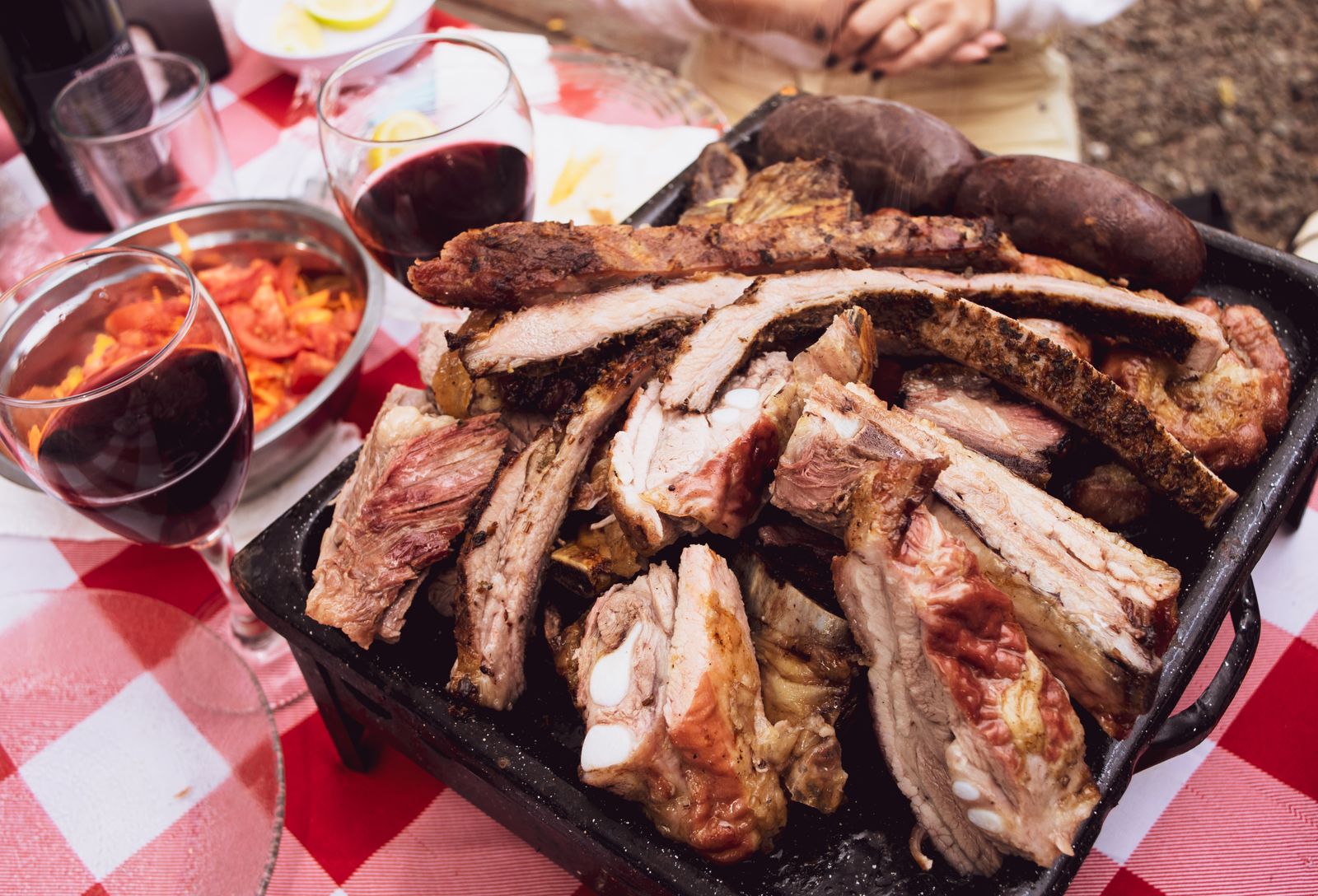
1. Asado (grilled short ribs, costillar) and Cabernet Sauvignon
The centerpiece. Long, slow fire, heavily charred fat, salt and nothing else. You want tannin to cut through it and enough dark fruit to survive the smoke. Cremaschi Furlotti Cabernet Sauvignon, served at 60 to 64°F. Maule's cool nights keep the acidity intact, which is the difference between a Cabernet that refreshes between bites and one that just sits there.
2. Choripan and Carmenere
Chorizo split in a crusty roll with pebre on top. Fat, paprika, a little chili heat. Carmenere's signature green peppercorn and bell-pepper note is not a flaw here, it is the seasoning. Serve at 60 to 64°F. This is the single most convincing Chilean pairing you can hand a skeptical guest.
3. Empanadas de pino and Pinot Noir
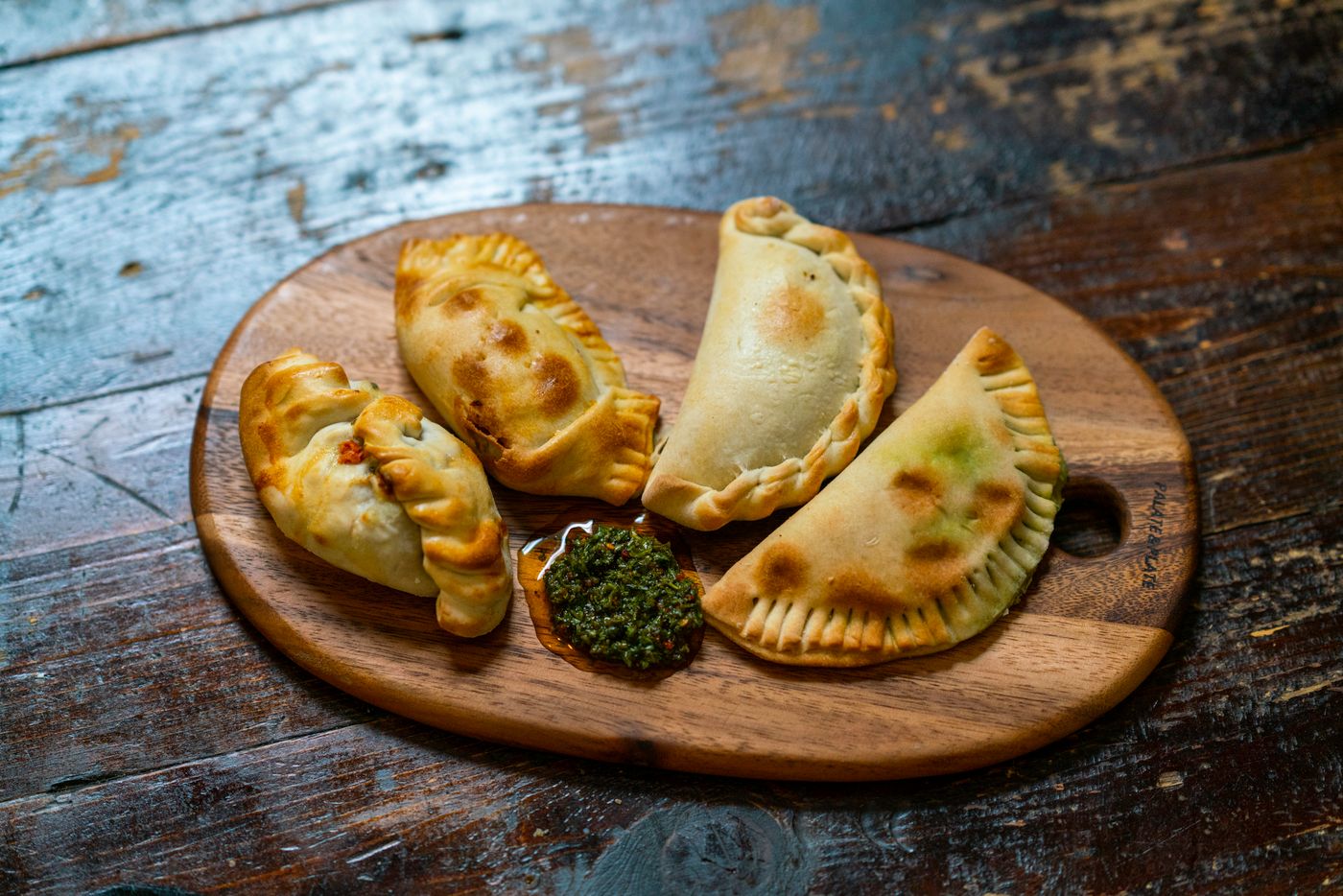
Beef, onion, olive, hard-boiled egg, folded and baked. Richer than it looks but not heavy, and usually eaten standing up with a glass in the other hand. A light, chilled red beats a big one every time. Cremaschi Furlotti Pinot Noir at 55 to 58°F. If you only add one Chilean red to a by-the-glass list this fall, we made the fuller argument for Chilean Pinot Noir in the by-the-glass slot.
4. Pastel de choclo and Chardonnay
Sweet corn baked over spiced beef and chicken, sugar dusted on top. The dish is creamy and faintly sweet, so a red fights it. Chardonnay at 48 to 52°F mirrors the corn and handles the richness. This is the pairing that surprises people at the table, and the one that sells a white bottle at a red-wine holiday.
5. Machas a la parmesana or ceviche and Sauvignon Blanc
Chile has 2,650 miles of coastline and the shellfish course is not optional. Razor clams under melted cheese, or a lime-cured ceviche. Sauvignon Blanc at 45 to 48°F, where the citrus lines up with the lime and the acidity resets the palate. More cold-weather and shoulder-season white pairings are in our Chilean white wine pairing guide.
6. The completo and a chilled red
A Chilean hot dog buried under avocado, tomato and mayonnaise. Do not overthink it. Pour the Pinot Noir cold, 52 to 55°F, and let the avocado's fat do the work. Cheap, joyful, and the reason Chilean street food and light reds belong in the same sentence.
7. Mote con huesillo and Moscato d'Asti
Dried peach and husked wheat in sweet syrup, drunk with a spoon, sold on every corner in September. Match sweet with sweet and low with low: Duchessa Lia Moscato d'Asti from Piedmont, served at 43 to 46°F, around 5% to 6% alcohol. Not Chilean, but it is the correct pour, and a cross-portfolio finish is how you get a second bottle onto the check.
Is Carmenere a good wine?
Yes, and its history explains why it took so long for anyone to agree. Carmenere is a Bordeaux grape that all but vanished from France after phylloxera, survived in Chile misidentified as Merlot for more than a century, and was only confirmed as a distinct variety by DNA testing in 1994. Every Chilean Carmenere vine older than 30 years was planted by someone who thought they were planting something else.
What you get is a medium to full red with plum and blackberry, soft tannins, and a savory green-herb edge that sits somewhere between Merlot's plushness and Cabernet Franc's herbal snap. Picked too early it tastes aggressively green, which is what gave it a bad decade. Picked ripe, on old vines in a warm valley like Maule, it is one of the best food reds in the hemisphere at its price.
What wine is Carmenere most like?
Start with Merlot, since that is literally what it was sold as: similar weight, similar plum fruit, similar softness. Then add the green peppercorn and tobacco of Cabernet Franc, and a touch of the smoky spice you find in Syrah. If a guest likes Merlot but finds it boring, or likes Cabernet Franc but wants more flesh, Carmenere is the answer, and that is the script to hand your floor staff.
For the trade: programming the September 15 to October 15 window
- Order now, not on the 15th. Displays that go up on day one sell through the whole month. Ours ship domestically, so lead time is days, not an ocean crossing.
- Five bottles, one story. Cabernet, Carmenere, Pinot Noir, Chardonnay, Sauvignon Blanc from a single Maule house reads as a curated Chile set, not a random varietal wall.
- Put the food on the shelf talker. "For the asado." "For empanadas." Occasion beats varietal for shoppers who do not already know Carmenere.
- Restaurants: run a Dieciocho menu the week of the 18th. Three courses, three glasses, one country. It is the cheapest way to move a full case of an unfamiliar grape.
- Hispanic grocery is the natural home. Chains like Sedano's already own this shopper. Chilean wine belongs in that aisle, not stranded in the import ghetto.
Frequently Asked Questions
What are the top 10 Chilean wines?
Chile's benchmark styles, rather than a fixed brand ranking, are Carmenere, Cabernet Sauvignon, Syrah, Merlot, Pinot Noir, Sauvignon Blanc, Chardonnay, Pais, Carignan and sparkling wine. For a Fiestas Patrias table the working five are Cabernet Sauvignon, Carmenere, Pinot Noir, Chardonnay and Sauvignon Blanc, all of which we carry from Cremaschi Furlotti in Maule.
What is the best Carmenere wine in Chile?
Look for old-vine fruit from warmer inland valleys such as Maule, Colchagua or Cachapoal, and a producer who picks late enough to ripen the tannin. Vine age and picking date matter more than the label, because underripe Carmenere is the variety's one real failure mode.
What temperature should I serve Chilean red wine?
Cooler than most people do. Carmenere and Cabernet Sauvignon at 60 to 64°F, Pinot Noir at 52 to 58°F. Twenty minutes in the refrigerator before pouring is usually the entire fix, and it is the difference between tasting fruit and tasting alcohol.
When is Chile's Independence Day in 2026?
September 18, 2026, marking 216 years since the First Government Junta of September 18, 1810. September 19 is Dia de las Glorias del Ejercito, and together the two days are the Fiestas Patrias holiday.
Pour Chile this September
Consumers: find Cremaschi Furlotti and the rest of our range near you through Find Our Wines. Our wines reach shelves at Costco, Total Wine & More, Albertsons, Spec's, BevMo!, Binny's, Hy-Vee, Rouses, Sedano's, Lunds & Byerlys and Haskell's, among others.
Trade: if you are building a Hispanic Heritage Month set or a Dieciocho menu and want the Chile portion handled, we hold inventory in the U.S. and ship to all 50 states. Talk to us about distribution, or browse the full portfolio. Behind it stands a family five generations deep since 1890 in Rioja and Navarra, with more than 600 wines rated 90 points or higher, up to 98, including a Decanter Platinum 97 for Manzanos 125 Aniversario.
Manzanos Wines USA is the premier importer of premium wines from Spain, Italy, Chile, South Africa, and France, serving all 50 US states through our nationwide distributor network. Learn more at manzanoswinesusa.com.
Please enjoy responsibly. Must be 21+.
Manzanos Wines USA is a Spanish wine importer in the United States: Rioja and Navarra wines from our own family wineries, in stock in the U.S. and ready to ship to all 50 states.
Wines featured in this story

Discover Our Wines
Explore the full Manzanos Wines USA portfolio — premium wines from Spain, Italy, Chile, France, and South Africa, delivered to distributors and restaurants across America.
Explore Our Wines