
Barolo vs Barbaresco: 7 Differences Every US Wine Buyer Should Know
Same grape, same Piedmont hills, a few miles apart. So why does Barbaresco taste so different from Barolo? Seven differences that matter on a US wine list.
Barolo is called the king of Italian wine and Barbaresco the queen. They are made from the same grape, Nebbiolo, grown in the same Langhe hills of Piedmont, a few miles apart, and both became DOCG in 1980. Yet a guest who orders one expecting the other notices the difference by the second sip. For US wine buyers heading into the holiday season, knowing exactly where the two part ways is what separates a good Piedmont list from a confusing one.
Key Takeaways
- Same grape, different hills: both are 100% Nebbiolo from the Langhe, on opposite sides of Alba.
- Size: Barolo covers roughly 2,250 hectares and about 14 million bottles a year; Barbaresco is around a third of that, near 800 hectares and about 5 million bottles.
- Ageing rules: Barolo needs at least 38 months before release (18 in wood); Barbaresco needs 26 months (9 in wood).
- Style: Barolo is firmer and built for the long haul; Barbaresco is silkier and more open earlier.
- On a list: carry both, and use Nebbiolo d'Alba as the by-the-glass entry point.
Are Nebbiolo and Barolo the same?
Not quite, and this is the most common question behind the whole comparison. Nebbiolo is the grape; Barolo and Barbaresco are places. Every bottle of Barolo DOCG and Barbaresco DOCG is 100% Nebbiolo, but not every Nebbiolo is a Barolo. The grape takes its name from nebbia, the autumn fog that settles over the Langhe at harvest, and it is grown all around Alba under other names too, most usefully as Nebbiolo d'Alba DOC.
What turns Nebbiolo into Barolo or Barbaresco is geography plus time: a defined zone of villages and a minimum period of ageing before the wine can leave the cellar. Those two variables explain almost every difference below.
Barolo vs Barbaresco: 7 differences that matter on a US wine list
1. Where they grow
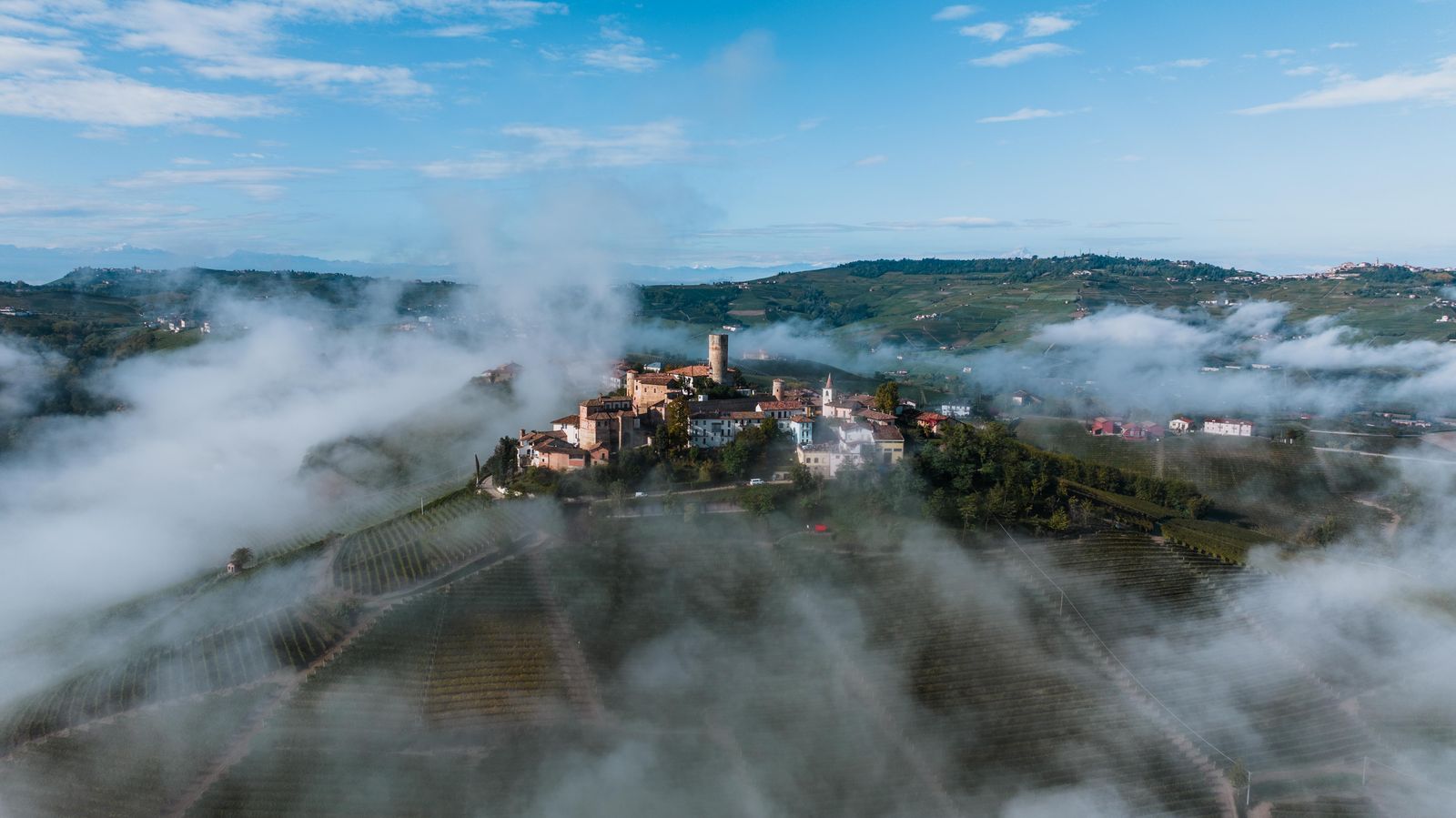
Barolo sits southwest of Alba across 11 communes, including Barolo itself, La Morra, Castiglione Falletto, Serralunga d'Alba and Monforte d'Alba. Barbaresco lies northeast of Alba, close to the Tanaro River, centred on the villages of Barbaresco, Neive and Treiso. The cover photo of this article shows Castiglione Falletto rising out of the morning fog, one of the classic Barolo villages.
2. Size of the appellation
Barolo is the larger of the two, at roughly 2,250 hectares of vineyards and around 14 million bottles a year. Barbaresco is about a third of that, near 800 hectares and roughly 5 million bottles. For a buyer, that scarcity is part of Barbaresco's appeal: fewer bottles, fewer producers, and less shelf competition.
3. Climate and soil
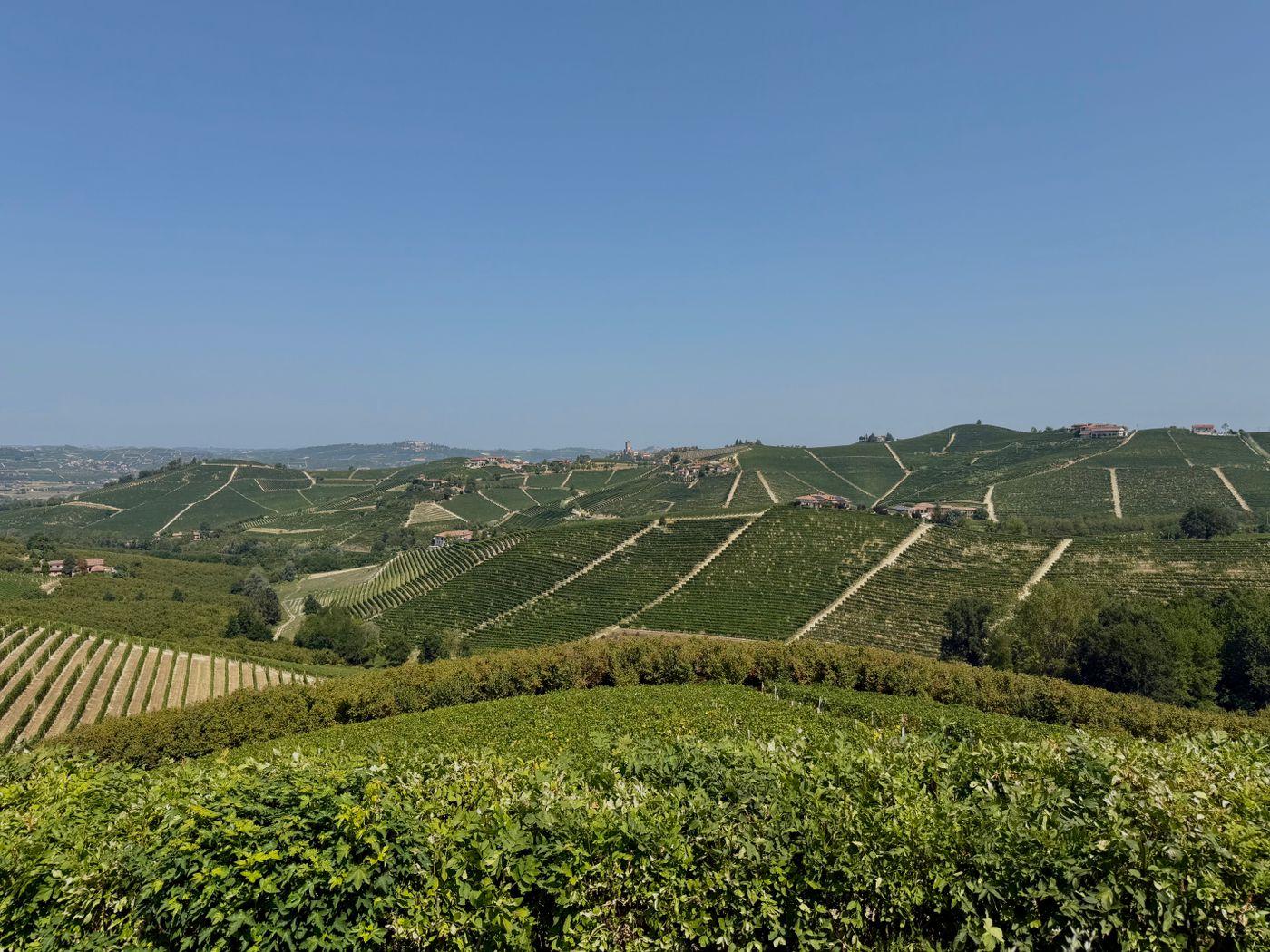
Barolo's vineyards generally sit a little higher, and its hillsides are known for compact marl soils that build structure. Barbaresco is lower and closer to the river, with a slightly warmer, more forgiving climate that ripens Nebbiolo a touch earlier. The result is a Barbaresco that tends to show more perfume and softer edges when young.
4. Minimum ageing before release
This is the rule that most shapes what reaches the glass:
- Barolo DOCG: at least 38 months of ageing, 18 of them in wood. Barolo Riserva needs 62 months.
- Barbaresco DOCG: at least 26 months of ageing, 9 of them in wood. Barbaresco Riserva needs 50 months.
In practice, Barbaresco reaches the market about a year earlier than Barolo from the same vintage.
5. Style in the glass
Both share Nebbiolo's signature: pale-looking garnet colour that hides serious tannin, with dried rose, violet, cherry, liquorice and earthy notes. The difference is in the grip. Our producer's own tasting notes put it well. The Duchessa Lia Barolo DOCG is described as "full bodied" with firm, gripping tannins and layers of truffle, leather and tobacco. The Duchessa Lia Barbaresco DOCG shows fine-grained, silky tannins that "caress rather than grip", with sour cherry, raspberry and dried rose petal. Both are 14% alcohol.
6. When to drink them
Barolo rewards patience: the winery suggests a long decant of at least two to three hours if opened young, and cellar ageing of 5, 10, 15 years or more. Barbaresco is approachable earlier and still ages beautifully for 10 to 15 years or more. For restaurants pouring tonight, Barbaresco is usually the easier recommendation; for a collector or a milestone dinner, Barolo is the bottle with the story.
7. How guests order them
Barolo is the name most US diners already know, and it sells on recognition alone. Barbaresco is the discovery: the bottle a server recommends to a guest who loves Barolo but wants something a little more open with dinner. That hand-sell is exactly where a well-trained floor team adds margin.
Why is Barbaresco so expensive?
Barbaresco often surprises guests who assume the "queen" should cost less than the "king". The reasons are simple: a small appellation, limited bottle counts, hillside vineyards worked largely by hand, and more than two years of ageing before release. Scarcity plus time costs money in any wine region, and the Langhe is no exception. We never publish shelf prices here, since they vary by state, but both wines belong in the premium tier of an Italian list.
What wine is most similar to Barolo?
The closest relative is Barbaresco, followed by Nebbiolo d'Alba, which offers the same grape from the wider Alba area without the long wait. The Duchessa Lia Nebbiolo d'Alba DOC (13.5%) shows red cherry, wild strawberry, violet and a hint of truffle with firm but delicate tannins, and it works brilliantly as a by-the-glass Nebbiolo that trades guests up to the two DOCGs.
Food pairings: which one with which dish
- Braised short ribs or brasato al Barolo: Barolo. Its tannin is made for slow-cooked beef.
- Grilled lamb chops: Barolo, as the winery's own pairing notes suggest.
- Roast duck or venison: Barbaresco, whose softer tannin lets the game shine.
- White truffle risotto or tajarin with butter: Barbaresco, perfume meets perfume. It is truffle season in Alba right now.
- Aged Parmigiano-Reggiano: either, and a perfect way to show both side by side.
- Mushroom pappardelle: Nebbiolo d'Alba by the glass.
Serving tip: the official tech sheets list 18°C (about 64°F) for Barolo and 18 to 20°C (64 to 68°F) for Barbaresco. In a warm US dining room, give either bottle 15 minutes in the cooler before opening. For more on glassware and decanting, see our guide on how to serve Barolo.
How to build a Nebbiolo flight for the holidays
October through December is when Piedmont reds move fastest, with truffle season, holiday roasts and gifting all landing in the same quarter. A simple three-step flight works for both restaurants and in-store tastings:
- Step 1: Nebbiolo d'Alba, to introduce the grape.
- Step 2: Barbaresco, to show elegance and perfume.
- Step 3: Barolo, to finish with structure and depth.
Guests taste the same grape climbing in intensity, and they leave knowing exactly which one they prefer. For retailers, that translates into a confident second purchase.
Frequently Asked Questions
Is Barolo or Barbaresco better?
Neither is better; they are different expressions of the same grape. Barolo is more powerful and needs more time, while Barbaresco is more elegant and approachable earlier. The right choice depends on the dish and how soon you plan to open the bottle.
Are Barolo and Barbaresco the same grape?
Yes. Both are made from 100% Nebbiolo grown in the Langhe hills of Piedmont. The differences come from their separate villages, soils and minimum ageing rules.
How long should you age Barolo?
Barolo is released after at least 38 months of ageing, but it often improves for 5 to 15 years or more in the cellar. If you open it young, decant it for two to three hours first.
What temperature should Barbaresco be served at?
Serve Barbaresco at 18 to 20°C, about 64 to 68°F. That is slightly cooler than most US room temperatures, so a short spell in the wine fridge helps.
Where to find Duchessa Lia Barolo and Barbaresco
Manzanos Wines USA imports Duchessa Lia, a Piedmont house based in Santo Stefano Belbo, alongside our family wines from Rioja and Navarra, made by five generations of the Fernández de Manzanos family since 1890. Our wines are in stock in the U.S. and ready to ship to all 50 states.
- Wine lovers: look up a store or restaurant near you on Find Our Wines, or browse the full portfolio.
- Distributors, retailers and restaurants: add a Barolo, a Barbaresco and a Nebbiolo d'Alba from one supplier, with US inventory behind them. Talk to our trade team.
Manzanos Wines USA is the premier importer of premium wines from Spain, Italy, Chile, South Africa, and France, serving all 50 US states through our nationwide distributor network. Learn more at manzanoswinesusa.com.
Please drink responsibly. 21+
Manzanos Wines USA is a Spanish wine importer in the United States: Rioja and Navarra wines from our own family wineries, in stock in the U.S. and ready to ship to all 50 states.
Wines featured in this story

Discover Our Wines
Explore the full Manzanos Wines USA portfolio — premium wines from Spain, Italy, Chile, France, and South Africa, delivered to distributors and restaurants across America.
Explore Our Wines