
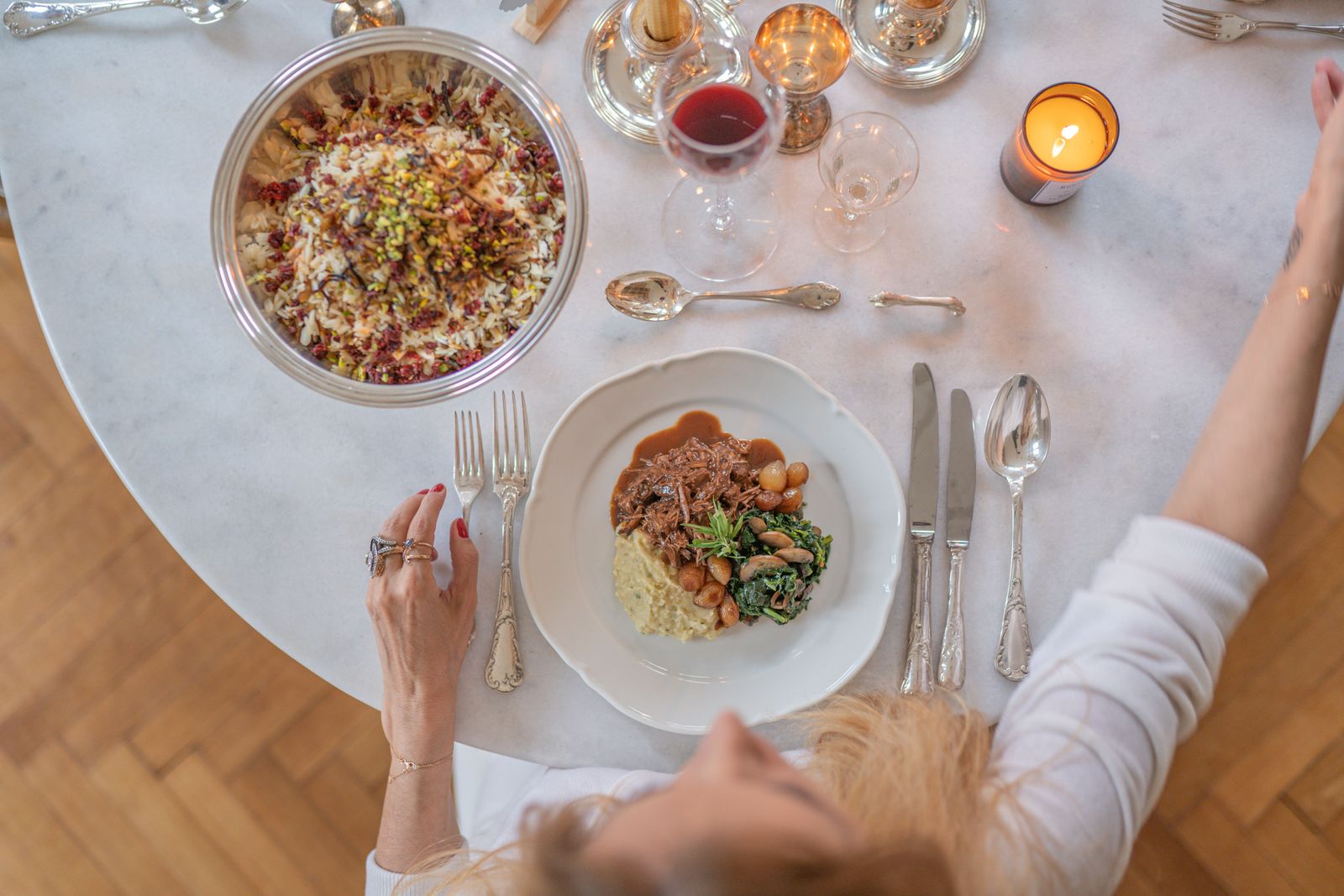
Nebbiolo d'Alba vs Barolo: 5 Reasons It Wins the By-the-Glass Slot in 2026
Italy still leads U.S. wine imports by volume, but its price per liter fell 16.9% in 2026. Barolo's younger sibling is how Piedmont keeps a glass pour.
Key Takeaways
- Italy still ships more wine into the United States than anyone else by volume, but its average price per liter fell 16.9% in the first half of 2026. The bottles losing ground are the expensive ones.
- Nebbiolo d'Alba is the same grape as Barolo, grown across a wider slice of southern Piedmont, with softer rules and an earlier drinking window.
- That makes it the rare Piedmont red that survives a by-the-glass pour cost in 2026.
- Serve it at 60 to 65°F in a big bowl. Warm and in a small glass, it reads as all tannin and no fruit.
- Duchessa Lia's Piedmont range sits in our U.S. warehouse, ready to ship to all 50 states.
Italy sent 170.2 million liters of wine into the United States in the first half of 2026, more than any other country. Its average price per liter over the same stretch fell to €4.65, down 16.9%. Read those two numbers together and the story writes itself: Italy is still moving the volume, but the money is moving down the shelf. Bottled wine, Italy's biggest U.S. category, dropped 28.2% in value to €524.5 million, and Italian PDO wines gave up 6.2% of their value while losing only 2.6% of their volume.
Tariffs and a soft dollar did most of that damage. Exports to the U.S. fell 15.5% between January and May alone. But the pattern underneath is the one every beverage director already feels: the $19 glass of Piedmont red is a hard sell right now, and the $95 bottle of Barolo is sitting on the list looking beautiful and not moving.
There is a wine that solves this, and it has been hiding in plain sight under the same grape name.
What's the difference between Nebbiolo d'Alba and Barolo?
Same grape. Different postcode, and different rulebook.
Barolo comes from a tightly drawn area of the Langhe hills in the province of Cuneo, spread across eleven municipalities. It must be 100% Nebbiolo and it must sit in the cellar for years before it is allowed out. Those rules are the reason Barolo tastes the way it does, and they are also the reason it costs what it costs.
Nebbiolo d'Alba is grown across a much broader sweep of south-central Piedmont, with more flexible regulations and a shorter required rest. The fruit is the same variety, working the same limestone-and-marl soils, giving the same rose petal, sour cherry and tar signature. What changes is the architecture. Nebbiolo d'Alba arrives with its tannins already unclenched, which means it is drinkable the year you buy it instead of the decade after.
The trade shorthand is that Nebbiolo d'Alba is Barolo's younger sibling. That undersells it. It is closer to the truth to say it is the same wine asked to answer a different question: not how will this taste in 2040, but what am I pouring on Thursday.
Why Nebbiolo d'Alba wins the by-the-glass slot in 2026
Five reasons, in the order a buyer actually weighs them.
- The pour cost works. Nebbiolo carries every bit of the intensity and structure people order Piedmont for, at a fraction of what the Barolo zone commands. That gap is what turns a bottle-only listing into a glass listing, and a glass listing is where volume lives.
- It drinks now. No decade of patience, no apologizing to a guest for a wine that has not opened yet. It shows its fruit on release and holds for five to ten years if a collector wants to sit on it.
- It sells itself at the table. "Same grape as Barolo" is the entire pitch. Your server needs one sentence, not a seminar.
- It is a bridge, not a compromise. The guest who orders it by the glass in September is the guest who orders the Barolo bottle in December. Put both on the list and the cheaper one does the recruiting.
- The category needs it. With premium Italian reds under real pressure this year, the bottles that move are the ones that deliver Piedmont character without Piedmont's top-tier price. That is exactly the space Nebbiolo d'Alba occupies.
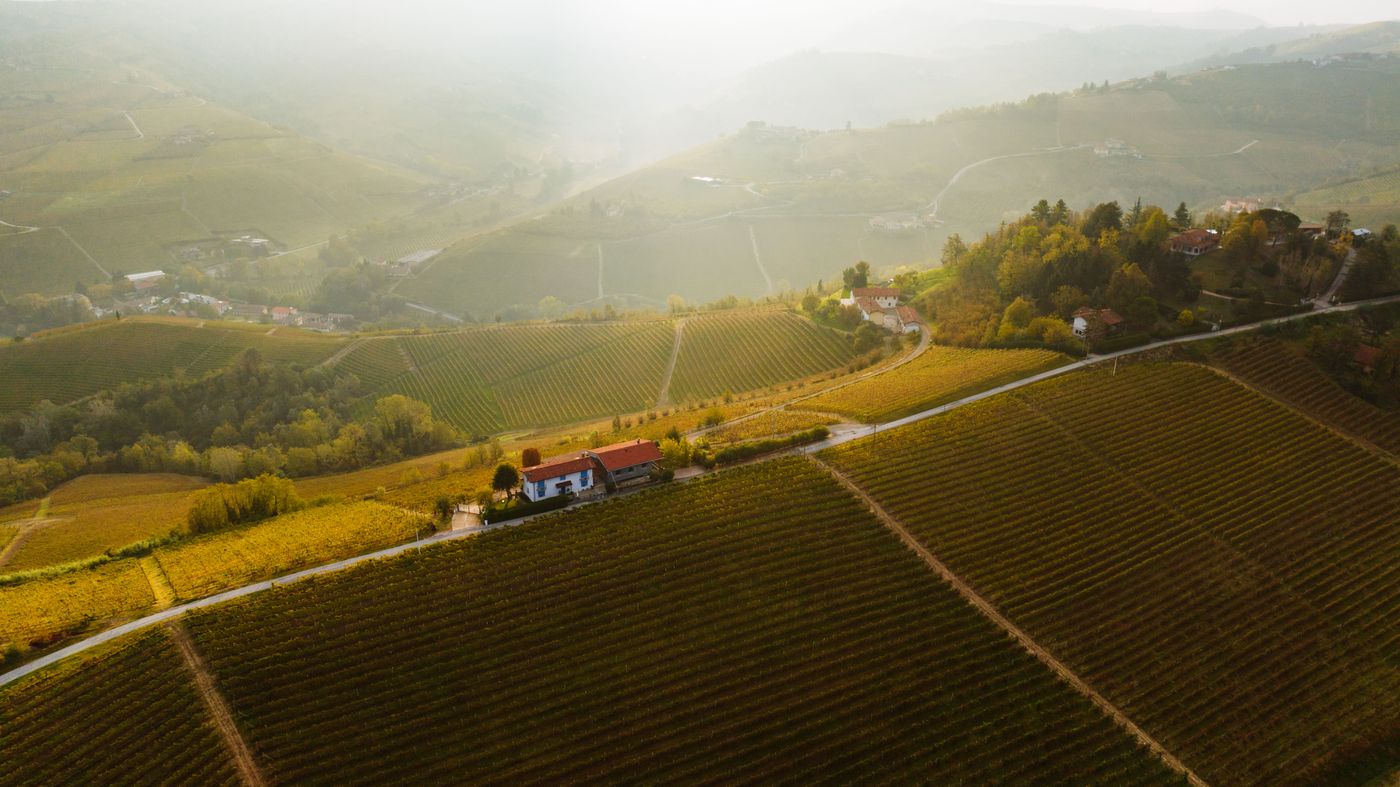
Those hills above Alba are the same slopes that feed the Barolo and Barbaresco names, fading out into the wider Nebbiolo d'Alba zone as the map opens up. Duchessa Lia works this ground out of Piedmont, and its range runs the length of what the region does well: Barolo at the top, Nebbiolo d'Alba as the everyday expression of the same grape, Moscato d'Asti for the sweet end of the list, and Gala Rosa for the pink pour.
What food pairs with Nebbiolo d'Alba?
Nebbiolo's tannin and acidity are built for fat and umami. Give it something rich enough to push back:
- Braised beef and short rib. The classic Piedmontese answer, and the one that flatters the wine most. Serve it over soft polenta and the pairing does the work for you.
- Mushrooms and truffle. Nebbiolo's savory, earthy register runs straight into a mushroom risotto or a plate of tajarin. If your kitchen shaves truffle in the fall, this is the glass that goes beside it.
- Egg pasta with a long-cooked ragù. Fresh tajarin, pappardelle, anything where the sauce has been on the stove for hours.
- Ossobuco and game. Venison, hare, and slow-cooked veal shank all have the depth to meet the wine halfway.
- Aged and medium-ripened cheeses. The end-of-meal pour that keeps the check open a little longer.
What it is not: a delicate wine for delicate food. Put Nebbiolo next to a light fish course and the tannin will flatten the plate.
How to pour it so it shows well
More Nebbiolo is ruined by service than by vintage. Three things fix it:
- Temperature. 60 to 65°F. Warmer than that and the alcohol climbs over the fruit; a room at 74°F is not a cellar.
- Glassware. A wide Burgundy-style bowl. Nebbiolo's aromatics are its best argument, and a narrow glass buries them.
- Air. Even the younger wine opens up over 20 to 30 minutes. Pour the first glass a little early if you can.
What this means if you are buying, not drinking
The tariff math this year has punished long lead times more than it has punished any particular country. Wine bought forward at a price agreed months ago, then landed into a moved market, is how margin disappears.
Our answer is inventory that is already here. Duchessa Lia's Piedmont wines sit in our U.S. warehouse alongside the rest of the book, in stock and ready to ship to all 50 states, which means a restaurant can list a Nebbiolo d'Alba by the glass without committing to a container. It also means one order can carry Piedmont next to Rioja, Navarra, Chile and the Cape. If you are building an Old World red section, our Manzanos Gran Reserva Rioja 2015 earned 95 points from Wine Enthusiast and the Reserva 2018 took 93, and both travel on the same truck as the Nebbiolo.
Five generations of the Fernández de Manzanos family have been making wine in Rioja and Navarra since 1890. The reason we import from Piedmont, the Maule Valley and the Cape as well is simple: American wine lists are not single-country documents, and neither should a supplier be.
Frequently Asked Questions
Is Nebbiolo d'Alba the same as Langhe Nebbiolo?
They are close cousins, not twins. Both are Nebbiolo from Piedmont and both are made to drink earlier than Barolo, but they are separate denominations with different permitted zones and rules. In practice the two occupy the same slot on a wine list, so buy on the producer rather than on the appellation letters.
How long can you age Nebbiolo d'Alba?
Five to ten years is the usual window, depending on the producer and the vintage. That is generous for a wine built to drink young, and it is short enough that you are not tying up cash in a cellar. Barolo, by contrast, often needs a decade before it starts talking.
What temperature should Nebbiolo be served at?
60 to 65°F, which is roughly 20 minutes out of a refrigerator or an hour in a cool room. Cellar temperature is a real instruction, not a formality: Nebbiolo's tannins turn harsh when the wine is served warm.
Why is Nebbiolo d'Alba cheaper than Barolo?
Land and time. Barolo's eleven communes are a small and expensive piece of the Langhe, and the wine is legally required to spend years aging before release. Nebbiolo d'Alba draws on a wider growing area and reaches the market sooner, so less capital sits in the barrel. The grape, and the growers, are frequently the same.
Is Nebbiolo a good introduction to Italian reds?
It is one of the best. It gives a drinker the aromatic lift of a Pinot Noir with the grip of a serious Tuscan red, and it is unmistakably itself from the first sniff. Guests who like it tend to keep ordering it.
Where to go from here
If you are drinking: check Find Our Wines to see what is on the shelf near you. Our portfolio reaches Costco, Total Wine & More, Albertsons, Spec's, BevMo!, Binny's, Hy-Vee, Rouses, Sedano's, Lunds & Byerlys and Haskell's, among others.
If you are buying: the Piedmont range, and the 600-plus wines in our book that have scored 90 points or better, are available through our national distributor network. Start at Become a Distributor, or read our Piedmont playbook for the wider regional picture.
Manzanos Wines USA is the premier importer of premium wines from Spain, Italy, Chile, South Africa, and France, serving all 50 US states through our nationwide distributor network. Learn more at manzanoswinesusa.com.
Please enjoy responsibly. Must be 21+.
Manzanos Wines USA is a Spanish wine importer in the United States: Rioja and Navarra wines from our own family wineries, in stock in the U.S. and ready to ship to all 50 states.
Wines featured in this story

Discover Our Wines
Explore the full Manzanos Wines USA portfolio — premium wines from Spain, Italy, Chile, France, and South Africa, delivered to distributors and restaurants across America.
Explore Our Wines