
How to Serve Barolo: Decanting, Temperature and the Right Glass in 3 Steps
Most disappointing Barolo was opened too late, poured too warm and served in the wrong glass. Three small fixes turn the same bottle into a different wine.
Most Barolo that disappoints at an American dinner table was never a bad wine. It was opened ten minutes before the steak, poured at 72°F into a small glass, and judged on its first sip. Barolo is the one red on the list that punishes impatience, and it rewards three small decisions more than any other bottle you will open this fall: when you pull the cork, how cool you pour it, and what glass you put it in.
This guide covers all three, plus the food that makes Nebbiolo sing, for home cooks planning an October braise and for the restaurant teams selling it by the bottle.
Key Takeaways
- Decant young Barolo for 2 to 3 hours. Taste every 30 minutes rather than guessing.
- Serve at 60 to 64°F, cellar-cool, not room-warm. Twenty minutes in the fridge fixes a warm bottle.
- Use the biggest bowl you own. Nebbiolo's rose-and-tar perfume needs room.
- Older bottles get the opposite treatment: stand upright, pour gently off the sediment, drink soon after opening.
- Duchessa Lia's Piedmont range is in stock in the U.S., ready to ship to all 50 states.
Why Barolo needs more care than other reds
Barolo is made from 100% Nebbiolo grown in a small zone of the Langhe hills south of Alba, in Piedmont. The grape is a paradox: pale in the glass, almost garnet at the rim, yet carrying some of the firmest tannin and highest acidity of any red variety in the world. The rules of the Barolo DOCG reflect that. The wine must age at least 38 months before release, 18 of them in wood, and a Riserva at least 62 months.
That structure is what lets Barolo age for decades. It is also why a young bottle, opened cold-turkey, can taste closed and grippy, all tannin and no fruit. Air, temperature and glass shape are the three levers that bring the cherry, rose petal, dried herb and tar notes forward. Get them right and the same bottle tastes like a different wine.
How long should you decant Barolo?
It depends almost entirely on age.
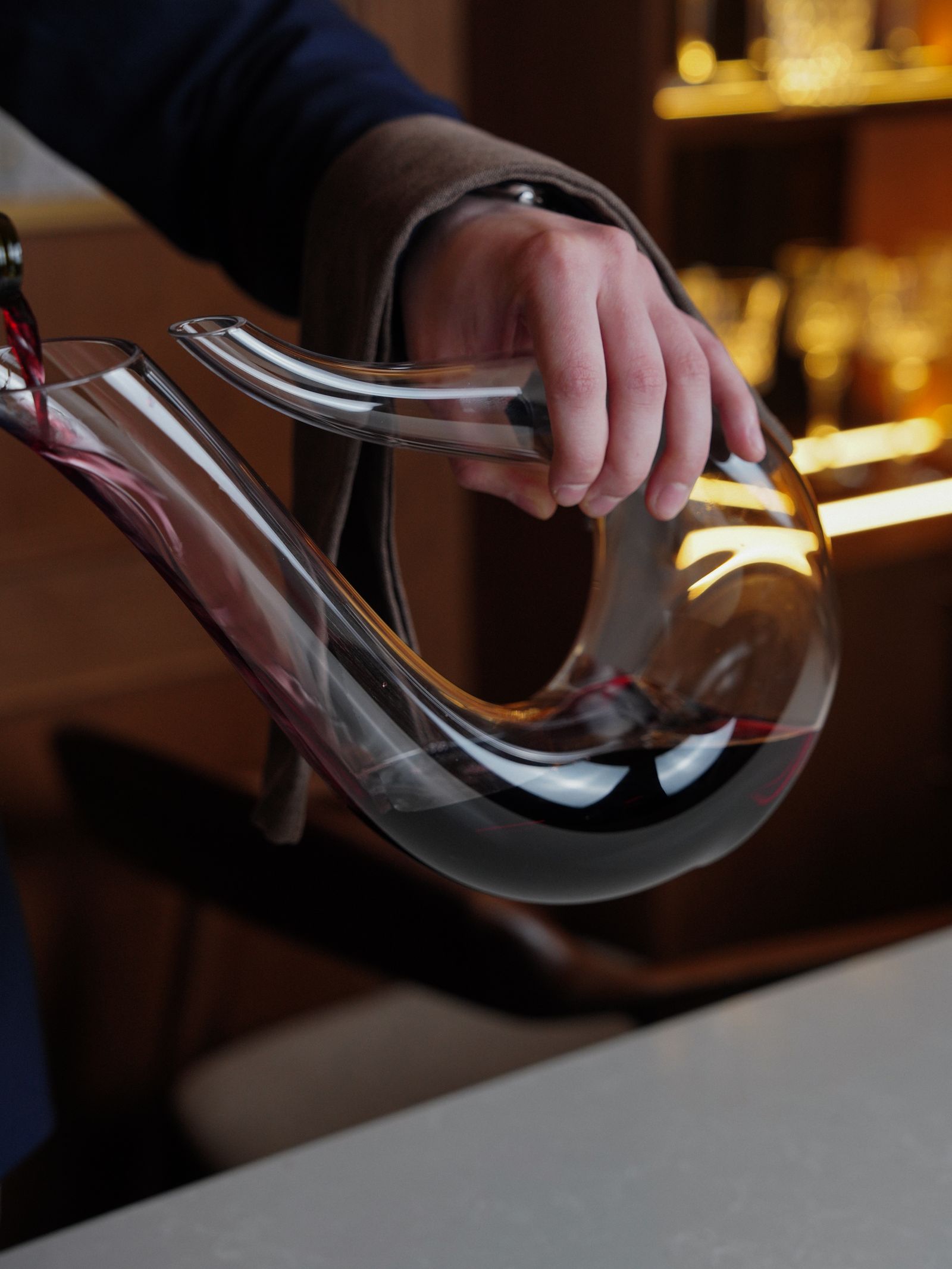
- Young Barolo (under about 10 years from vintage): decant for 2 to 3 hours. This is the bottle most American buyers are opening, because most Barolo on U.S. shelves and wine lists is a recent release. Pour it into a wide decanter and let it breathe while you cook.
- Middle-aged Barolo (roughly 10 to 20 years): 30 to 60 minutes is usually enough. The tannins have already softened; you are mostly waking the aromas and separating the wine from any sediment.
- Old Barolo (20 years and beyond): do not aerate aggressively. Stand the bottle upright for a day so the sediment settles, decant slowly with a light behind the neck, and drink within an hour or so. Mature aromas are fragile and can fade fast.
The best rule is to taste, not time. Pour a splash when you decant, then again every 30 minutes. When the fruit pushes past the tannin on the finish, it is ready. More air is not always better.
No decanter? No problem
Open the bottle three hours ahead and pour off a glass so more of the wine is exposed to air. Or simply pour it into a clean glass pitcher. A wide surface does most of the work; the fancy swan-neck shape is optional.
What temperature should Barolo be served at?
Between 60 and 64°F (16 to 18°C). That is cooler than most American dining rooms, which sit around 70 to 72°F. Served warm, Barolo's alcohol rises, the fruit turns flat and the tannin feels harsher. Served a few degrees cooler, it reads as fresh, precise and perfumed.
The practical fix: if the bottle has been sitting in the kitchen, put it in the refrigerator for about 20 minutes before you open or decant it. In a restaurant, store open Barolo in the cellar or a wine fridge, not on the back bar under the lights.
What glass is best for Barolo?
The largest-bowled red wine glass you own. Nebbiolo is an aromatic grape, and a wide bowl gives that perfume of roses, cherries and tar room to collect before it reaches your nose. Many sommeliers favor a broad, balloon-shaped glass of the kind usually sold for Burgundy or Pinot Noir, for exactly this reason. A tall Bordeaux-style glass also works well.
Pour less than you think, about a third of the bowl, so you can swirl. A small, straight-sided glass is the single fastest way to make an expensive Barolo taste ordinary.
How long does Barolo last after opening?
A young Barolo, recorked and refrigerated, usually holds well for 2 to 3 days, and some sturdy bottles stay pleasant for up to five. Many tasters find day two even better than day one. Older bottles fade faster, so plan to finish them the night you open them. Always reseal with a tight stopper and keep the bottle cold; let it warm back up to 60 to 64°F before pouring.
What food goes best with Barolo?
Barolo's tannin and acidity are built for fat, protein and umami. October is the perfect month for it, because fall cooking is slow, rich and savory:
- Braised short ribs or beef braised in red wine, the Piedmontese classic brasato al Barolo.
- Mushroom risotto or tajarin with butter; if you can find truffles, Barolo is their natural partner.
- Roast duck, lamb shoulder or venison.
- Aged hard cheeses such as Parmigiano Reggiano or an aged Gouda.
- Grilled ribeye with a simple salt crust, an easy American match.
Avoid very spicy dishes and delicate fish; the tannin will clash.
Build a Piedmont evening with Duchessa Lia
Duchessa Lia works out of Piedmont, and its range covers a full dinner from start to finish:
- Gala Rosa for the aperitivo and the antipasti board.
- Nebbiolo d'Alba, the same grape as Barolo with softer tannin and an earlier drinking window, for the pasta course or a weeknight bottle that needs little or no decanting.
- Barolo for the braise or the roast, decanted, cool and in a big glass.
- Moscato d'Asti for dessert: lightly sparkling, low in alcohol, and a fresh finish after a big red.
For the restaurant trade, that ladder is a ready-made Piedmont flight. Nebbiolo d'Alba covers the by-the-glass slot, Barolo carries the bottle list, and the staff tip that sells it is the one in this article: offer to decant, and pour it cool. Guests notice. We cover the by-the-glass case in detail in Nebbiolo d'Alba vs Barolo.
And if your table runs Old World across the board, Barolo sits naturally beside Rioja. Our Manzanos Gran Reserva Rioja 2015 earned 95 points from Wine Enthusiast and the Manzanos Reserva Rioja 2018 earned 93, two more reds that open up beautifully with a little air.
Where to find Duchessa Lia in the U.S.
Manzanos Wines USA is run by the Fernández de Manzanos family, making wine in Rioja and Navarra for five generations since 1890, and our book includes more than 600 wines rated 90 points or higher. Duchessa Lia's Piedmont wines are in stock in the U.S. and ready to ship to all 50 states, so a retailer or restaurant can add Piedmont without waiting on an import cycle.
- Wine lovers: use Find Our Wines to locate a store near you. Our portfolio appears at retailers including Total Wine & More, Spec's, Binny's, BevMo!, Hy-Vee and Rouses, with availability varying by state and label.
- Distributors, retailers and restaurants: source the Piedmont range alongside Rioja, Navarra, Chile and South Africa in one order. Start at Become a Distributor or browse our wines.
Frequently Asked Questions
Does Barolo need to be decanted?
Young Barolo almost always benefits from 2 to 3 hours in a decanter, which softens its firm tannin and lifts the aromas. Old Barolo should be decanted gently and briefly, mainly to leave the sediment behind.
Should Barolo be chilled?
Slightly. The ideal is 60 to 64°F, cooler than a typical room. About 20 minutes in the refrigerator brings a room-temperature bottle into range.
What glass should I use for Barolo?
A large, wide-bowled red wine glass, such as a Burgundy-style balloon or a tall Bordeaux glass. Fill it only about a third full so there is space to swirl.
How long does an open bottle of Barolo last?
Recorked and refrigerated, a young Barolo usually stays good for 2 to 3 days and sometimes up to five. Older vintages should be finished the same evening.
What is the difference between Barolo and Nebbiolo d'Alba?
Both are 100% Nebbiolo from Piedmont. Barolo comes from a smaller, stricter zone with longer required aging; Nebbiolo d'Alba is softer, earlier drinking and usually needs little decanting.
Manzanos Wines USA is the premier importer of premium wines from Spain, Italy, Chile, South Africa, and France, serving all 50 US states through our nationwide distributor network. Learn more at manzanoswinesusa.com.
Please drink responsibly. 21+.
Manzanos Wines USA is a Spanish wine importer in the United States: Rioja and Navarra wines from our own family wineries, in stock in the U.S. and ready to ship to all 50 states.
Wines featured in this story

Discover Our Wines
Explore the full Manzanos Wines USA portfolio — premium wines from Spain, Italy, Chile, France, and South Africa, delivered to distributors and restaurants across America.
Explore Our Wines