
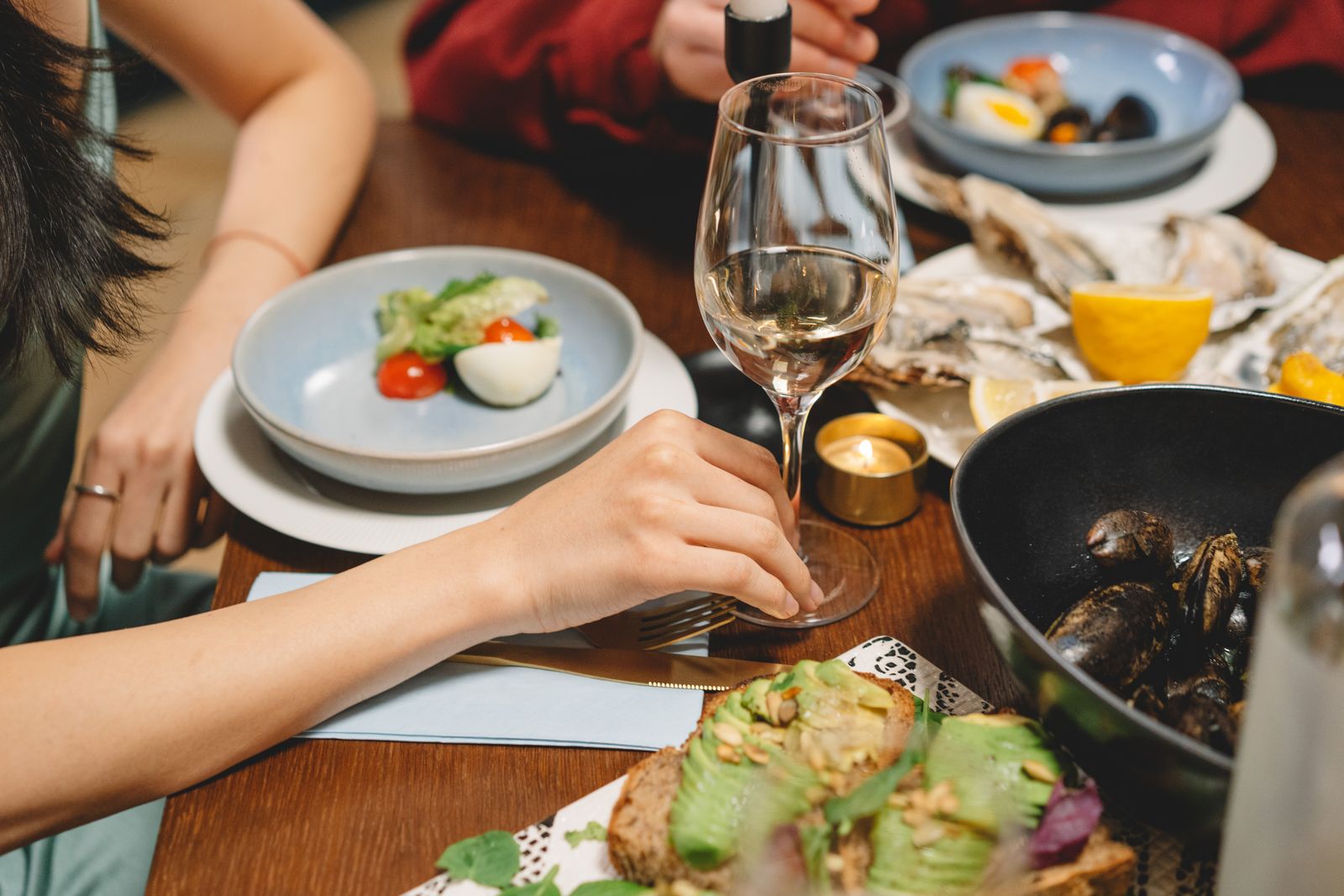
Massachusetts Pours More Wine Than Any State. 6 Bottles Built for Its 2026 Lists
Massachusetts diners order 72% more restaurant wine than the US average, yet guests have capped the glass at $16. Six bottles that solve both at once.
No state pours more restaurant wine per location than Massachusetts. When Toast analyzed transactions across its restaurant network, Massachusetts came out first in the country, with diners ordering roughly 72% more wine per location than the national average. Florida and Rhode Island trailed behind. New England, in other words, is the most wine-forward dining market in America, and it is not close.
That is the good news for anyone building a list in Boston, Cambridge, Worcester or on the Cape. The harder news is what has happened to the price of a glass. Trade press reported this summer that some US restaurants are pushing wine markups toward six times wholesale cost, while more than three quarters of American wine drinkers have told the Wine Market Council they will not pay more than $16 for a glass. Those two lines are heading in opposite directions, and the wine director standing between them has to solve it with bottle selection, not with wishful pricing.
Key Takeaways
- Massachusetts leads the nation in wine ordered per restaurant location, about 72% above the US average.
- The state moves roughly 13 million 9L cases of wine a year and has about 5.3 million residents of legal drinking age.
- Guests have drawn a line at $16 a glass, so the math has to be solved at wholesale, not on the menu.
- Rioja and Navarra deliver real oak aging and 90-plus scores at a cost that still leaves room on the check.
- Everything here is in stock in the US and ready to ship to all 50 states, which matters when a by-the-glass slot goes dry on a Friday.
Why does Massachusetts drink so much restaurant wine?
Three things stack up. The first is density: roughly 1.37 on-premise licenses per 1,000 residents, so there are more tables per capita where a bottle can be ordered. The second is the food. A dining culture built on oysters, chowder, day-boat fish, lobster and North End red sauce is a dining culture built for wine. Beer belongs at a clam shack; it does not carry a raw bar through three courses.
The third is a genuinely educated audience. Boston supports some of the deepest Spanish wine programs in the United States. Taberna de Haro has built a list of more than 300 Spanish wines and collected recognition from Wine Spectator, The World of Fine Wine and Wine Enthusiast for it. Barcelona Wine Bar runs one of the largest Spanish programs in the country. Guests in this market have already been taught what Tempranillo tastes like with age on it. You are not starting from zero.
The scale underneath all this is substantial. Massachusetts sells roughly 13 million 9L cases of wine a year against 56 million of beer and 7.8 million of spirits, and it ranks among the ten largest beverage alcohol markets in the country. It is a license state regulated by the ABCC, working through the standard three-tier system, with a still wine excise of $0.55 per gallon.
The $16 ceiling is the real constraint on a 2026 list
Standard on-premise markup runs 3x to 5x wholesale, with casual rooms closer to 3 or 3.5x and upscale dining and hotel outlets at 4 to 5x. Run that arithmetic backwards from the guest's ceiling and the picture gets clear fast. A bottle that lands at $14 wholesale pours five 5-ounce glasses; at $14 to $18 a glass that is $70 to $90 of revenue on $14 of cost, a gross margin in the 75% to 85% range before labor and breakage. Push the wholesale cost up and either the glass price crosses the line guests have drawn, or the margin collapses.
Meanwhile wine's dollar share of the on-premise channel slipped about 0.3% over the past year as ready-to-drink cocktails picked up ground. Wine is not losing because guests stopped caring. It is losing the slots where the pour stopped feeling worth the price.
The way out is not a cheaper wine. It is a better wine at the same cost. That is precisely where Spain sits in 2026. US wine imports fell hard in the first quarter, down 38.9% in value and 20.6% in volume year over year, and the average import price dropped 23% to about 4.1 euros per liter. Buyers pulled back on volume and got sharper about what they bought. Spain held up inside that: in April 2026 alone the US bought 24.1 million euros of Spanish wine, making it Spain's second largest export market after Germany. Fewer bottles crossing, better bottles chosen.
Six bottles built for a Massachusetts list in 2026
These are the wines from our book that answer the New England brief: acid for shellfish, real aging for the steak and short rib side of the menu, and a wholesale cost that lets a glass land where guests will actually buy it.
1. Manzanos Gran Reserva Rioja 2015 (95 points, Wine Enthusiast)
The bottle-list anchor. Gran Reserva means years in oak and years more in bottle before release, and a 95-point score gives the server something concrete to say in eight words. Pour it with dry-aged sirloin, braised short rib, or a lamb chop off a Back Bay grill. Serve at 60 to 64°F, not room temperature, which in a busy dining room runs closer to 72°F and flattens the fruit.
2. Manzanos Reserva Rioja 2018 (93 points, Wine Enthusiast)
The by-the-glass workhorse. Reserva carries genuine oak and bottle age at a cost that still clears the markup math, which is exactly the combination that has gone missing in Napa and Bordeaux at this level. Good with roast chicken, mushroom pasta, a North End Bolognese, or a burger that deserves better than the house red.
3. Las Campanas, Navarra
Navarra is the quiet answer to a market that has priced itself out of Provence. The rosado has the structure to handle a lobster roll with drawn butter, and the whites work as an oyster pour with more texture than a thin Pinot Grigio. Serve chilled but not frozen, 46 to 50°F.
4. Berceo Rioja
A second Rioja voice for lists that want depth without repeating themselves, at an entry that suits a neighborhood room in Somerville as easily as a white-tablecloth list.
5. Cremaschi Furlotti Sauvignon Blanc, Maule Valley, Chile
The raw bar pour. Chilean Sauvignon Blanc brings citrus and salinity without the grassy aggression that fights a Wellfleet oyster. It is also the value cushion on a list where the imported white category has gotten expensive.
6. Duchessa Lia Moscato d'Asti, Piedmont
The end of the meal, and an under-served slot on most Boston lists. Low in alcohol, lightly sparkling, sweet without being heavy, it sells a dessert course that would otherwise be a coffee and the check. It also answers the growing share of guests moderating their alcohol intake without ordering nothing.
Across our book we count more than 600 wines rated 90 points or higher, up to 98, including a Decanter Platinum 97 for Manzanos 125 Aniversario. That depth exists because five generations of the Fernández de Manzanos family have been farming Rioja and Navarra since 1890, and because we have spent years walking the American market ourselves. Selection here is not accidental. You can browse the full range on our wines page.
What wine goes with New England clam chowder and lobster?
It depends on which chowder is in front of you, and most pairing advice ignores that.
- New England creamy chowder: you need acid to cut cream. A textured white or a traditional white Rioja with a little oak stands up to it where a light, neutral white simply disappears.
- Clear Rhode Island or Connecticut style chowder: go crisp and mineral. A Navarra white or a Chilean Sauvignon Blanc is the cleaner match.
- Lobster roll, butter style: the butter is the pairing problem, not the lobster. A dry rosado from Navarra has the fruit and the acid to handle both.
- Lobster roll, mayo style: lean harder on acidity. Sauvignon Blanc, served properly cold.
- Raw oysters: salinity plus citrus. Skip anything oaky.
- Steak, short rib, lamb: this is Rioja's home ground. Reserva or Gran Reserva, depending on the price of the plate.
Frequently Asked Questions
Which state drinks the most wine in restaurants?
Massachusetts. In Toast's analysis of restaurant transactions across its platform, Massachusetts ranked first in the nation for wine ordered per restaurant location, roughly 72% above the US average, with Florida and Rhode Island next.
Is Massachusetts a control state for alcohol?
No. Massachusetts is a license state, regulated by the Alcoholic Beverages Control Commission. The state does not control production or retail sales directly, and product moves through the standard three-tier system of supplier, wholesaler and retailer.
How much should a restaurant pay wholesale for a wine sold at $15 a glass?
At the common industry rule of pricing a glass at roughly the wholesale bottle cost, a $15 glass points to a bottle in the mid-teens wholesale, pouring five 5-ounce glasses for $75 against that cost. Casual rooms often work at 3x to 3.5x the bottle, upscale rooms at 4x to 5x.
What Spanish wine should a Boston restaurant put on by the glass?
A Rioja Reserva is usually the highest-return single addition. It carries real oak and bottle age, it has a score the staff can quote, and it pairs across a New England menu from roast chicken to short rib. For a second slot, a Navarra rosado covers the entire shellfish and summer side of the list.
Where can I buy Spanish wine in Massachusetts?
Our wines are carried nationally at retailers including Costco, Total Wine & More, Albertsons and other chains, and they are distributed to all 50 states through our partner network. Use the Find Our Wines locator to check what is available near you.
For Massachusetts buyers and operators
If you run a restaurant, wine bar or retail shop in Massachusetts, the pitch is simple. Every wine named above is in stock in the United States and ready to ship to all 50 states, so a by-the-glass slot that goes dry on a Friday is a phone call, not a six-week container wait. If you want to carry the range or talk about a program built around your menu, start at become a distributor.
If you are a Massachusetts wine drinker, the same bottles your favorite Boston room is pouring are findable on a shelf near you. Check Find Our Wines, then read our take on why Rioja and Navarra are the smartest value reds on US lists this year.
Manzanos Wines USA is the premier importer of premium wines from Spain, Italy, Chile, South Africa, and France, serving all 50 US states through our nationwide distributor network. Learn more at manzanoswinesusa.com.
Please enjoy responsibly. Must be 21+.
Manzanos Wines USA is a Spanish wine importer in the United States: Rioja and Navarra wines from our own family wineries, in stock in the U.S. and ready to ship to all 50 states.
Discover Our Wines
Explore the full Manzanos Wines USA portfolio — premium wines from Spain, Italy, Chile, France, and South Africa, delivered to distributors and restaurants across America.
Explore Our Wines