

US Wine Lists Cut 26% of Their Reds. These 4 Piedmont Bottles Earn Their Slot.
American restaurants now carry 26% fewer red wine labels than a year ago. The tariff math is brutal, and it is changing which Piedmont bottles are worth a pour.
American restaurants are pouring from a much shorter list than they were a year ago. Datassential data cited by Unione Italiana Vini found that US restaurants now carry 37% fewer white wine labels and 26% fewer red wine labels than before the tariffs landed. That is not a shift in taste. That is a beverage director with a calculator, cutting anything that no longer pays for the shelf space it occupies.
For Piedmont, the math got personal on August 1, 2025, when the United States applied a 15% tariff to Italian wine imports. Unione Italiana Vini estimates the hit to Italian producers at roughly €317 million over the following year. The pain did not stay in Italy: the United States Wine Trade Alliance reports American importers, distributors, retailers and restaurateurs seeing sales down between 5% and 15%, or worse.
Key Takeaways
- US restaurant lists have shed 26% of their red labels and 37% of their whites — every remaining slot has to work harder.
- A 15% tariff on Italian wine took effect August 1, 2025; the US had been absorbing 60% of all Asti DOCG exports.
- Nebbiolo d'Alba is the value play: real Nebbiolo character, released younger, at a fraction of a Barolo's price.
- Moscato d'Asti's 4.5–6.5% alcohol makes it the strongest by-the-glass answer to the low-ABV trend.
- Chilled reds are the fastest-growing category on summer lists — and Nebbiolo d'Alba is built for 55°F.
Why did Italian wine get more expensive in the US?
A 15% duty is applied at the border, before a single case moves. By the time that cost passes through an importer's margin, a distributor's margin and a restaurant's multiple, it does not stay 15% — it compounds. Guests are seeing increases of 5% to 15% on bottles and by-the-glass pours, and buyers are absorbing the rest out of a gross margin that runs near 60% on European wine.
Piedmont's sweet wines were hit at an awkward moment. The US had been taking 60% of Asti DOCG's exports — an enormous concentration in one market. The consortium responded by tightening supply, cutting permitted yields from 100 to 90 tonnes per hectare for the 2025 campaign, and 2025 production closed at roughly 85 million bottles, down 4% from 90 million the year before.
The practical consequence for a US buyer: the wines that survive the edit are the ones that do more than one job. A bottle that only works as a special-occasion red is a liability. A bottle that anchors a by-the-glass program, pairs across half the menu, and gives a server an easy story is an asset.
What's the difference between Nebbiolo d'Alba and Barolo?
Same grape, different rulebook — and that is where the value hides. Barolo carries the strictest aging requirements in Piedmont and delivers the most structured, tannic, age-worthy expression of Nebbiolo. Nebbiolo d'Alba works under lighter aging rules, which means it reaches the table younger, softer and considerably cheaper.
The growers who make it are emphatic that they are not producing a "baby Barolo." It is a genuinely different wine: more floral and red-fruited, less imposing, drinkable on release rather than on a ten-year plan. Decanter has spent recent years making the case that Piedmont is not all about Barolo, and the buying desk has caught up.
In a year when every list slot is contested, that combination — recognizable grape, lower price, no cellaring required, no tariff-inflated sticker shock — is exactly what a wine director needs. Nebbiolo d'Alba lets a restaurant keep Piedmont on the page after the Barolo pour has been cut to a single by-the-bottle listing.
Should you serve Piedmont reds chilled?
Yes — and this is the single easiest way to sell more red in July. "Chillable reds" are the fastest-growing segment on US restaurant lists, and sommeliers are now printing serving temperatures directly on the menu. The target is 55–60°F: roughly 10–15 minutes in an ice bucket, or 20–30 minutes in the fridge.
Do not overshoot. Below about 50°F, aromatics shut down and tannins turn hard and metallic — you lose the wine trying to cool it. Nebbiolo d'Alba, with its high acidity and perfumed red fruit, sits perfectly in that window, which is why it keeps appearing on lists next to Gamay and Frappato. For a steakhouse or a seafood-forward summer menu, a lightly chilled Nebbiolo keeps red-wine revenue alive on a 90-degree evening when nobody wants a warm, heavy pour.
How sweet is Moscato d'Asti, and what do you serve with it?
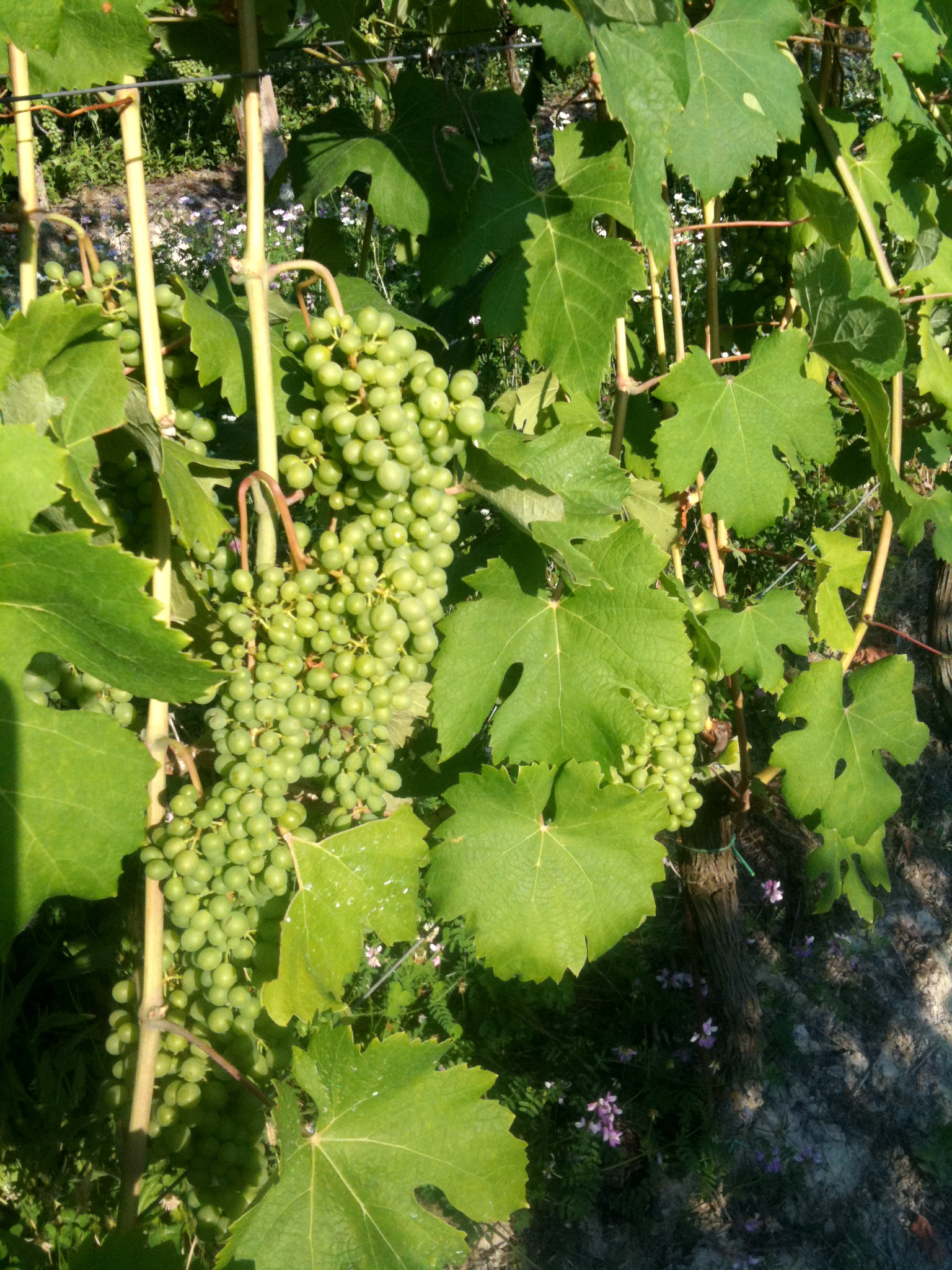
Less sweet than its reputation, and far lower in alcohol than almost anything else on the list. The DOCG rules set actual alcohol between 4.5% and 6.5% by volume — a third of the strength of a Barolo. The sweetness is real, but it is carried by bright acidity and a gentle sparkle, which is why it reads as refreshing rather than cloying.
That low-ABV profile is the reason Moscato d'Asti deserves a second look from US buyers right now. The moderation trend has not slowed, and most operators are answering it with zero-proof cocktails and thin light beers. A genuinely delicious 5% wine is a better answer.
Where it earns its keep on a menu:
- Fruit tarts and stone-fruit desserts — the acidity cuts the buttery crust while the wine echoes the fruit.
- Spicy food — Thai green curry, Sichuan heat, spiced wings. Sweetness plus bubbles is the classic cooling counterweight.
- Salumi with melon or figs — the carbonation scrubs the fat and the sweet-savory contrast lands every time.
- Blue cheese and washed-rind — the oldest sweet-wine trick there is, and it still closes checks.
- Brunch — an under-used slot where a 5% sparkler outperforms a mimosa.
The four Duchessa Lia wines that earn a slot in 2026
Duchessa Lia is our Piedmont house, and the range is built to cover distinct jobs rather than repeat the same one at four price points.
- Barolo — the anchor. Every serious Italian list needs one, and this is the bottle that tells guests the program is credible. Keep it by the bottle; let it sell the rest of the page.
- Nebbiolo d'Alba — the workhorse and the by-the-glass answer. Nebbiolo character without the Barolo price or the wait. Serve it at 55°F through the summer.
- Gala Rosa — the aperitivo and patio pour, and the bottle that converts a rosé drinker into a Piedmont drinker.
- Moscato d'Asti — dessert, brunch, spice and the low-ABV slot, all from one SKU. The most versatile bottle on this list.
Four bottles, four jobs, one origin story. In a year of shrinking lists, that is the argument that wins shelf space.
One importer, one purchase order
Tariffs punish complexity. Every additional supplier is another set of paperwork, another landed-cost calculation, another minimum. Consolidating origins with a single importer is one of the few levers a buyer still controls.
Alongside Duchessa Lia, we bring in Rioja and Navarra — including Manzanos Gran Reserva Rioja 2015, rated 95 points by Wine Enthusiast, and Manzanos Reserva Rioja 2018 at 93 points — plus Cremaschi Furlotti from Chile and Bruce Jack from South Africa. You can see the full range among our wines.
Frequently Asked Questions
Is Nebbiolo d'Alba worth buying instead of Barolo?
For everyday drinking and by-the-glass programs, yes. It offers genuine Nebbiolo aromatics and acidity at a materially lower price, and it is ready to drink on release rather than needing years of cellaring. Barolo remains the wine you buy for structure, age-worthiness and prestige.
What temperature should Nebbiolo be served at in summer?
Aim for 55–60°F — about 15 minutes in an ice bucket or 25 minutes in the fridge. Avoid dropping below 50°F, where the aromatics close up and the tannins turn harsh.
Is Moscato d'Asti the same as Asti Spumante?
No. Both come from Moscato Bianco in Piedmont, but Moscato d'Asti is gently frizzante and much lower in alcohol, at 4.5–6.5% by volume. Asti is fully sparkling and higher in alcohol.
Are Italian wine prices going to keep rising in the US?
The 15% tariff that took effect on August 1, 2025 remains the dominant factor, and Italian producers have been cutting yields and diversifying toward Asian and Central European markets in response. Buyers should plan around current landed costs rather than assume a near-term rollback.
Bring Piedmont to your table
For wine lovers: Duchessa Lia is available through our distributor network across all 50 states — find our wines near you.
For the trade: if you are rebuilding an Italian section around fewer, harder-working labels, we can help you cover Piedmont from aperitivo to dessert with four SKUs. Become a distributor or ask your rep about the Duchessa Lia range.
Manzanos Wines USA is the premier importer of premium wines from Spain, Italy, Chile, South Africa, and France, serving all 50 US states through our nationwide distributor network. Learn more at manzanoswinesusa.com.
Manzanos Wines USA is a Spanish wine importer in the United States: Rioja and Navarra wines from our own family wineries, in stock in the U.S. and ready to ship to all 50 states.
Wines featured in this story

Discover Our Wines
Explore the full Manzanos Wines USA portfolio — premium wines from Spain, Italy, Chile, France, and South Africa, delivered to distributors and restaurants across America.
Explore Our Wines